Ignoring My Kids Is My Love Language
My helicopter parent era is over. How over involvement in our kids' lives may be fuelling the very anxiety we’re trying to prevent.

I’m ignoring my kids. It sounds terrible, but after a decade of parenting and noticing the signs of the “anxious generation” all around me, I’ve come to realize that some of our well-intentioned habits may be sabotaging childhood. We’re raising anxious kids partly because we’re such anxious parents.
“Hovering” doesn’t quite capture it anymore. We’ve jumped off the helicopters and landed in over-involved territory, parachuting into their daily lives. We’re rocked by guilt and the pressure to over-explain, over-analyze and feel compelled to be involved in every moment.
We’re a generation offering love as overprotection, gripped by post-pandemic fears, the constant scroll of parenting advice, and the noise of social media seeping into childhood itself. We overpraise, insert ourselves and wait to catch every fall. And studies back this up. In a national C.S. Mott Children’s Hospital poll, 44 percent of parents of kids ages five to eight and more than half of parents of nine to 11-year-olds said safety worries keep them from letting their child do things independently. The same poll found that 56% believe unsupervised children “cause trouble,” and one in four have criticized another parent for inadequate supervision. In Pew’s Parenting in America Today, 45 percent of parents describe themselves as overprotective.
For me, the reflex was to be their constant teacher, coach, narrator, and entertainer. While I’m still full in on kid admin—the school emails, snack rotation and scheduling—I’ve been gradually retreating from the rest. My parenting philosophy now revolves around keeping mystery alive, letting imagination whir and making risk feel normal so confidence can build.
Resist the urge to step in
My first real wake-up call came when a friend brought her daughter over, and I kept interrupting the little girl, peppering her with questions about what her doll was up to. My friend eventually smiled and said, “I know we feel like we need to chime in, but you don’t have to. We can have our adult time too.”
It’s most obvious at the playground. The sports broadcaster parents move like shadows in lockstep with their children, commenting on every play-by-play. I watch from the edge, sometimes grip the bench or resist the urge to keep giving a thumbs-up, as my children lean into their hesitation, climb higher or try again. I’ve been to playdates with two parent-referees hovering over every toy, and it’s exhausting for everyone. Every step back I take is an invitation for my children to step forward.
Think back to your childhood. My strongest memories are of biking to a new stretch of the neighbourhood with friends, my parents trusting we’d figure it out.
Distance builds resilience
This restraint still feels countercultural, like I’m the only parent standing still. Yet this intentional distance is the radical act of love that our anxious culture tends to overlook. This isn’t just my hunch; experts are noticing it too. Dr. Nina Mafrici, clinical psychologist and co-director at Toronto Psychology & Wellness Group, explains why this separation is so vital:
“Clinically, we’re seeing a generation of children with fewer opportunities to experience manageable frustration and recover from it. When parents absorb all the uncertainty, kids lose the chance to develop emotional muscles like patience, problem-solving, and distress tolerance. The more anxious the parent is about preventing discomfort, the more anxious the child becomes about facing it.”
Our over-involvement is actively undermining their ability to cope. It’s ironic. The same instincts that drive us to protect and enrich our kids can also hinder their growth. The good news: we can course-correct. Sometimes that means pausing before we lunge into action or taking a deep breath before we speak.
Creating space for wonder
It’s easy to ruin wonder by immediately jumping in to explain or help. If one of my children asks where the water goes when they flush the toilet, I could find a video about plumbing. Instead, I ask what they think. Maybe they imagine an underground world of sparkling tunnels.
When my daughter looked up from bed one evening and asked, “Mommy, why do we have chins?” I paused, letting the wheels turn in her head until she drifted off to sleep. When she tells me her small scrape “really likes” her, so it won’t go away, I don't correct her. Not everything has to be a teachable moment; sometimes, wonder needs silence to breathe. With the best intentions, we often inundate our kids with commentary, limiting their sense of curiosity.
I asked Lenore Skenazy, president of Let Grow and author of Free-Range Kids, once dubbed “America’s Worst Mom” for letting her nine-year-old ride the subway home alone, what she thinks about letting children’s minds wander.
“Think back on something that gobsmacked you with wonder. Now imagine your mom right next to you, saying, ‘Wow, did you notice that squirrel? Squirrels are mammals... the word "squirrel" starts with a blend, "sq."... they can carry rabies, so let's not get too close. What would you name that squirrel if he were your pet? Some people like names from Greek mythology, like Hermes...’ We think we have to provide kids with ‘teachable moments.’ But kids learn more when their minds get opened by wonder, which requires a chance to actually wonder, not to be taught.”
Trust your kids to figure it out
Independence comes from kids pushing themselves outside their comfort zones. And that's important. Even the smallest acts of courage make my kids beam with pride—ordering their own meal, solving an issue directly with their teacher, or performing on a friend’s piano in front of strangers. They don't do it for my praise, but for the thrill of their own accomplishment.
And it stepping back raises some eyebrows, so be it. When it comes to the pressures parents face, Skenazy says, “It's unfortunate that judging parents has become a national pastime. When questioned about missing [one] practices, the truth is this: ‘I love my kids, but that's their time to play. I trust them and their coach, and they know they are loved, even if I'm not there for every goal.’”
As Dr. Mafrici concludes, “Confidence doesn’t grow in moments of perfect comfort; it grows in the small spaces where children are trusted to figure things out for themselves. From a developmental perspective, this distance is not detachment; it’s faith in the child’s capacity to cope and adapt.”
Because if I’m always the answer to everything, I’m also becoming the problem. We’re all trying our best, but maybe the point is to do less and let our kids do more.
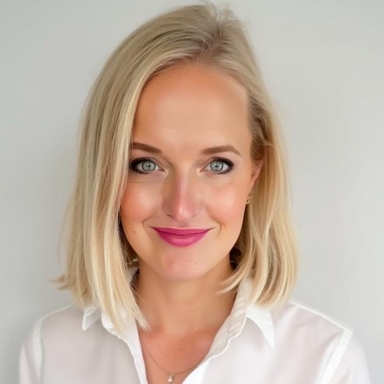
Kaili Colford is a Toronto-based Estonian-Canadian writer and mom of four whose work explores the wonder of childhood and the meaning and magic tucked into everyday life. She’s the co-founder of Sõnad: Esto Words, a project that celebrates Estonian language and culture through bilingual picture books, and works in global social impact focused on children’s rights.