What I Wish I'd Known About Pelvic Organ Prolapse Before Having Kids
Up to half of women will experience pelvic organ prolapse. One mom opens up about her two prolapses, what helped her heal and expert advice on managing POP during pregnancy.

I have a prolapse. Two actually. The first happened when I was 36, two years after giving birth to my first child. The second, during my second pregnancy. One for each kid.
I barely knew what a prolapse was. Pelvic organ prolapse (POP) is when the bladder, uterus or rectum drops from its normal position and presses into the vaginal wall. I’d heard about them in passing, but surely that couldn’t happen to me, a young athlete who ran marathons and summited mountains.
It turns out that up to 50 percent of women will experience POP at some point in their lives—and I've experienced it twice.
My first labour and delivery were traumatic
I wanted to try labour and birth without medication, but had a code word if I changed my mind: baba ganoush. What I hadn’t anticipated was arriving at a full hospital and going through transition (read: the most brutal part of labour) in a cramped triage room. You better believe I started calling out “baba ganoush”. But fun fact, you can’t get an epidural in triage.
When I was finally admitted, I was fully dilated and advised against an epidural. After three gruelling hours of pushing, my baby boy was born at sunrise. But then I bled 2.1 litres.
What I didn’t know is that when they catheterized me, they released 800 ml of urine, nearly twice what you’d normally pee. My midwife later told me my full bladder likely caused my prolonged pushing (it makes it harder for your uterus to contract) and increased my risk for hemorrhaging and POP.
The prolapse I didn't see coming
My naive brain thought that if you don’t have a prolapse immediately after giving birth, you’re in the clear. I did my postpartum pelvic floor physical therapy (PT) like the good student I’ve always been, but life happened. All of a sudden, two years had gone by, and I was chasing around a toddler. I was juggling work, my family went through rough times, and with COVID to top it off, my kegel exercises flew out the door.
I’m embarrassed to admit how my prolapse happened, but as I remind my oldest son, who loves potty humour, everybody poops! Because of my ongoing constipation issues, I often strained (which is bad for the pelvic floor). So yes, it happened during a BM.
It felt like my vagina collapsed, a strange sensation I’d never experienced. A urogynecologist confirmed my grade 2 rectocele. It sucked. It felt like a tampon permanently falling out of my vagina. I felt unfeminine. I felt like a failure.
I wasn’t sure about another pregnancy with a prolapse
The thought of going through birth again terrified me. But I didn’t want to miss out on having another baby, even if it came with risk. I began consulting my healthcare team. My most important takeaway was to work on core and pelvic floor muscles to build strength before another pregnancy. Then the goal during pregnancy was maintenance.
But besides that, I heard a lot of “there’s no real way to know” responses. This left me feeling angry, helpless and disappointed in the lack of support and research for women’s bodies.
Then I got pregnant again

I panicked a bit. I was scared of the collateral damage. I knew there were many variables out of my control, but I refused to accept powerlessness. So I did a deep dive.
Luckily for me, my deep dive included my very credentialed sister-in-law (who was also my birth support partner), Dr. Caitlin Smigelski, PT, DPT; expert in obstetric PT and faculty with APTA Academy of Pelvic Health.
Not everyone has a Caitlin, so I’m here to share her. As she explained to me, “Pregnancy is a risk factor for POP. Although there’s a lot about pregnancy that is out of your control, there are many things you can do during pregnancy, labour and birth, and postpartum to reduce your risk and manage your symptoms.”
Here’s what she taught me about managing prolapse during pregnancy:
- Continue pelvic floor PT.
- Exercise to maintain strength and general fitness.
- Avoid straining with bowel movements. Maintain a balanced diet, use a squatty potty or toilet stool, and talk to your provider about stool softeners or supplements.
- Use supportive wearables like belly bands and/or compression shorts and leggings.
- Check with a urogynecologist to see if you’re a candidate for a pessary.
Why I tried biofeedback
One of my biggest issues has been relaxing my pelvic floor, which can be a risk factor for developing a POP. “Like muscles in the face or shoulders, some people have a hard time relaxing the pelvic floor. This can lead to pain, constipation, difficulty voiding and decreased muscle strength. Additionally, relaxing these muscles is important for a vaginal birth.” Caitlin says.
I set a goal to be more relaxed during contractions. Caitlin encouraged me to try biofeedback: “Many folks have difficulty feeling if they contract and relax their pelvic floor muscles correctly. Biofeedback uses sensors to provide real-time visual feedback of the muscle activity to improve one’s awareness and control of the muscles.”
The PT I saw tested different mechanisms, and biofeedback showed that my body was most successful at relaxing when I put my hand in a cup of ice.
During one of these sessions, I mentioned noticing a new vaginal bulge and asked the PT to examine me. She confirmed what I suspected: another prolapse, this time a cystocele. Unlike my first, I hadn't felt this one happen. Now I was facing birth with two prolapses.
Preparing to give birth with POP
I had some decisions to make. Everyone said “just get a C-section,” and at first, it seemed like the obvious answer. But, according to Caitlin, it’s not that simple.
Why cesareans aren't always better for prolapse:
- Cesarean after a vaginal birth isn’t protective against POP and carries more short- and long-term risks.
- It’s a major abdominal surgery with a longer recovery. You’ll need extra help afterward and won’t be able to do as much physically, like picking up a baby, bending over, climbing stairs, etc.
What increases prolapse risk:
- Operative vaginal birth (forceps or vacuum) can cause significant muscle injury.
- Prolonged pushing can injure the pelvic muscles, and in my case, my full bladder contributed. It’s important to get reminders to empty your bladder during labour.
- Having a large baby
- Giving birth over 35
Armed with this information, I met with my midwife and an OBGYN. I had several risk factors: a baby measuring large, gestational diabetes, and I was 40. Because I hemorrhaged after my first birth, I had an increased risk of bleeding again (and a Cesarean elevates this risk). After extensive conversations, I was advised to attempt a vaginal birth with a scheduled induction at 38 weeks.
Meanwhile, we worked to invite the baby out earlier. After two membrane sweeps, I went into labour at 37 weeks.
A lot went wrong in my first birth, but a lot went right in my second
This time, I arrived at the hospital with time to spare. I got the epidural. It helped me relax my pelvic floor, and with a catheter keeping my bladder empty, my uterus could actually do its job. I was surprised (and delighted!) when my baby descended on his own with minimal pushing. My entire pushing phase was 20 minutes, ending with two strong pushes to birth him.
Here’s what made the difference:
- A warm compress on my perineum.
- Guided pushing from my midwife.
- Putting my hand in a cup of ice to relax my pelvic floor during delivery contractions.
- Resting in a warm bath.
- Frequent position changes and using gravity to help my baby descend into my pelvis.
But the work wasn’t over. I returned to my pelvic floor PT, who guided me through exercises to rebuild my muscles and my urogynecologist, who fitted me for a pessary. While I still have POP, I’ve been able to manage my symptoms through these efforts.
For a long time, I felt like my body was broken. But pelvic health shouldn’t be a taboo topic when it's an essential part of our being. Educating myself and sharing have helped me heal. Women deserve access to information about their bodies. There are specialists and treatments that can help. We need to normalize conversations around pelvic health.
How do you know if you have a prolapse?
Symptoms can include:
- Vaginal heaviness, pressure or discomfort.
- Feeling or seeing a bulge.
- Difficulty emptying the bowel or bladder.
- Pain with penetration.
If you have these symptoms, make an appointment with a gynecologist or primary care provider to be examined.
What do you do if you have one? Ask for referrals to a pelvic PT and a urogynecologist. You can discuss options with your urogynecologist, like being fitted for a pessary or surgery.
Expert
- Dr. Caitlin Smigelski, PT, DPT; expert in obstetric PT and faculty with APTA Academy of Pelvic Health
This article contains affiliate links, so we may earn a small commission when you make a purchase through links on our site at no additional cost to you.
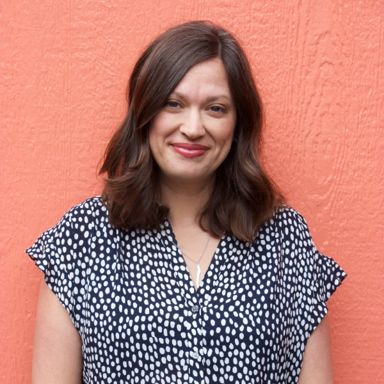
Jessica Dean is a freelance writer and marketing and communications consultant. Her words have helped the missions of organizations like Sierra Club, Stand Up to Cancer, and Crohn's & Colitis Foundation. In addition to Today's Parent, she's been published in Ms. Magazine and The Manifest Station. She lives in Portland, OR, with her husband and two sons.