No One Told Me About Postpartum Anxiety
I tell my story so moms know they’re not alone, there is good help, and you can’t believe how much better you will feel when you get it

I knew that I wanted to be a mom at the age of 10. That’s when my brother was born, and I got my first taste of maternal instincts and love. Far before I had even thought about a career, I knew I wanted to have kids. So, I was over the moon when I became pregnant with my first daughter. It took a little longer than I thought to get there, but my dream was coming true. Until it became a nightmare.
My pregnancy was anything but ordinary
Even before I had a positive pregnancy test, I developed a crippling pain around my heart and in my back. At the ER, I told the doctors there was a good chance I was pregnant (I’d been charting and had a gut feeling our last attempt had finally stuck). But no pregnancy hormones showed up in my blood, so they forged ahead with X-rays and a CT scan. Two things near the top of the list of DO NOT DOs during pregnancy. They found nothing and sent me home.
The next day, two lines showed up on the stick. As the tiny cells in my womb multiplied, so did the pain. Every heartbeat hurt. Forget that recommended pregnancy exercise—walking up stairs or even down the hall was excruciating. I moved slowly, grinning and bearing it. Sometimes it eased, but not for long. By Memorial Day weekend, five months in, I couldn’t even walk through the shallow end of a pool to reach my friends.
The pain no one could explain
Back at the ER, they insisted on a nuclear medicine scan. They injected me with radioactive material, had me sign a waiver saying they didn’t know what it might do to my baby, and assured me it was my only option. Another “don’t do but I did it” moment. The test revealed nothing. They admitted me, pumped me full of opioid painkillers, and left me all weekend without answers. Finally, on Tuesday, a petite, no-nonsense cardiologist arrived and suggested a simple ultrasound.
Twenty minutes later, we finally had an answer: The sac around my heart was swollen and filling with fluid. If it had gone on much longer, they would have had to insert a needle into me and drain it. Luckily, at this point, the solution was none other than ibuprofen (they said it was ok). I felt incredible relief 20 minutes after taking one Advil. Of course, they had no idea why my heart was doing this, so the next four months were filled with specialist visit after specialist visit, looking for autoimmune conditions (they liked tossing around the word Lupus), but no answers.
Trying to enjoy pregnancy while managing fear
So, I returned to reading my bedside pregnancy books, the ones that enumerated all the things I shouldn’t do but had already done. At 28 weeks, I had to switch to steroids to control the inflammation, or risk the healthy development of one of my baby’s critical blood vessels. Then I had to get an ultrasound every week, because steroids can make your baby stop growing. I staggered through those last weeks, exhausted, and feeling like a freak whose broken heart had probably doomed her baby’s health before she was even born.
And then, on a chilly October morning, my daughter was born. That night in the hospital was—and is to this day (spoiler alert: she’s in college now)—the best night of my life. I felt like I had fulfilled my destiny as I held this soft, warm little being to my chest. It was all worth it. It was all going to be okay.
Another curveball
Only, it wasn’t. Three days later, I developed crushing cramps, a 105 fever and had to return immediately to the hospital for a procedure to remove the little bit of leftover placenta that was causing an infection in my uterus. I bawled as my mom took my newborn from my arms to bring her home to a dad who was going to have to bottle-feed her. Breastfeeding was another dream I was sure would be dashed as soon as she had a taste of formula (at least that’s what all the books had told me).
I stayed one full night and day in the hospital and felt enormous peace (probably had something to do with the painkillers). When I returned home to my baby (who, btw, picked breastfeeding right back up), I didn’t feel that kind of peace again for nine months.
Of course, there were many wonderful moments of being a new mom, like napping together in the warm sunny spot on the bed. Watching her jerk her arms and make excited noises, looking at the animals in her little mat gym thing. And breastfeeding: the one thing that was going to plan. So much about motherhood felt natural and right and exactly what I imagined it would be. I knew I was born for this.
Running on no sleep and nonstop “what ifs?”
And, still, growing inside me was a constant fear that my baby was not okay, and it was all my fault. I began to obsess over any little thing that went wrong with her. A bug bite was probably cancer. When she had a fever from the flu, I kept taking her temperature all day long (poor kid). Germs became the enemy. My husband brought home piles of board books from the library, and I used a Clorox wipe to clean each and every page.
This current of worry picked up more and more speed, racing underneath all the happy moments. I no longer slept and spent my nights imagining every possible thing that could be wrong with both of us (they still didn’t know what had gone wrong with me). Some mornings, the stress was so bad, I threw up before going to work.
The moment everything boiled over
And then it all came crashing down on a trip to Jamaica when my daughter was nine months old. She fell off a high hotel bed onto a concrete floor, and I finally fell apart completely. The hotel doctor assured us she was fine, but I stayed up every night all night searching for signs of a concussion. Exhausted and defeated, I cried on the porch of our little bungalow and screamed at my husband: I WANT OUT!
I didn’t want out of my life. I wanted out of my mind, which had become an unrelenting minefield of “what ifs,” bad news, and impending doom. I could not take another day inside it.
As soon as we landed back in New York, I went to see a reproductive psychiatrist who diagnosed me with postpartum anxiety (PPA, which I didn’t even know was a thing!) and put me on a low dose of the antidepressant sertraline (Zoloft). Within two weeks, I felt myself returning. The constant vigilance eased, and the happy moments had space to breathe. In fact, not only did I feel free of the last year of anxiety, but I felt better than before I even got pregnant. I realized I’d been living with an unacceptable level of anxiety most of my life. I can’t fully explain the difference in my brain, but it felt like it could finally lie down and rest. And I could finally fully enjoy being a mom.
And, finally, through therapy, I deconstructed everything that had happened. Much of it was objectively scary. I had incredible pain from an unknown source that might mean I had a life-altering medical condition. And I now know that unwanted intrusive thoughts about the safety of babies happen to more than 90 percent of new parents. And that up to 25 percent of new moms experience mental health disorders during and after pregnancy.
But what struck me the most was how the expectations we place on mothers—and that I placed on myself—are so unreasonable and disproportionate to both the amount of control we have over the outcome of a pregnancy and to the resilience of kids. The very act of growing another human being inside you and then pushing them into the world is nothing short of a miracle. But we’re taught that it happens easily, proceeds according to a plan, and makes us happy. So, when it doesn’t, we feel so alone. And we feel wrong.
We’re not. We’re beautiful, awesome, imperfect things trying to do the hardest job we will ever love, and we deserve all the support for the completely understandable challenges that come with that. That is what I want for all moms.
What I want all moms to know:
Postpartum anxiety (PPA) is one of several perinatal mood and anxiety disorders that can happen during pregnancy, after birth, or in new parenthood. It’s common, it’s treatable, and it’s not your fault.
Common symptoms include:
- Constant worry
- Feeling that something bad might happen
- Racing or intrusive thoughts (like fears of harm coming to your baby)
- Changes in sleep or appetite
- Irritability, anger, or rage
- Feeling on edge or unable to sit still
Reach for help anytime something doesn’t feel right.
PPA can happen to anyone, but risk increases with:
- A history of anxiety or other mood disorders (check!)
- Complications during pregnancy (hello!) or birth
- Not having enough support
- High stress or trauma (especially related to pregnancy or birth)
- Financial strain
It’s caused by the intense hormonal changes of pregnancy and postpartum, combined with life stressors or preexisting conditions, not weakness or failure.
It’s highly treatable. Therapy, medication, or both can make a big difference. The sooner you get help, the sooner you’ll start feeling like yourself again—and your baby will benefit, too.
You deserve good help and to feel better. Ask your OB or primary care provider for referrals to perinatal mental health specialists, or contact Postpartum Support International by calling or texting “Help” to 1-800-944-4773. You can also check out Postpartum Support Canada) to connect with trained professionals near you. I love the organization’s motto: “You are not alone. You are not to blame. With help, you will be well.”
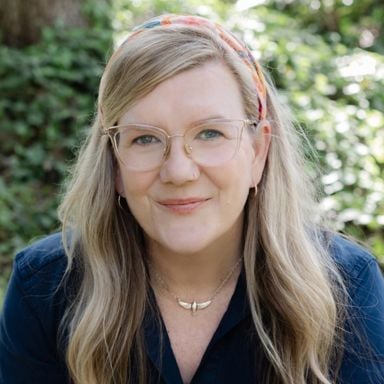
Kate Rope is an award-winning journalist and author of Strong as a Girl: Your Guide to Raising Girls Who Know, Stand Up for, and Take Care of Themselves andStrong as a Mother: How to Stay Happy, Healthy, and (Most Importantly) Sane from Pregnancy to Parenthood. You can find her on Instagram, TikTok, and Facebook.